
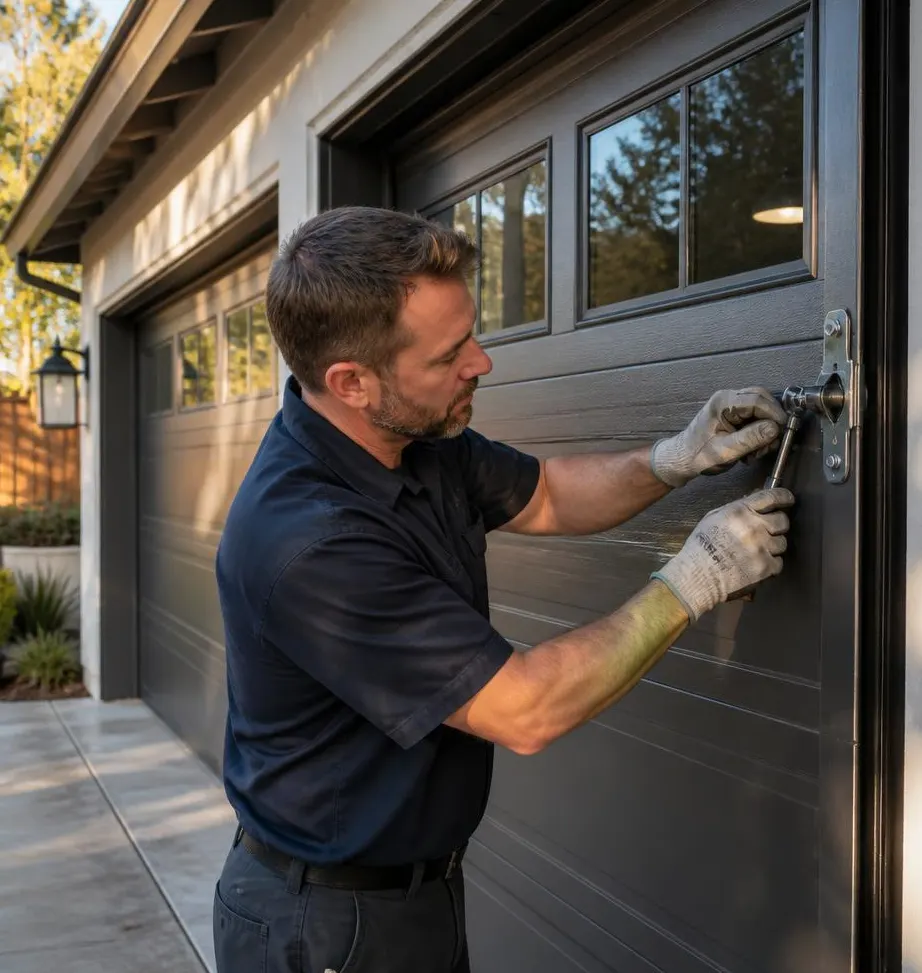
Who Fixes the Garage Door: You or Your Landlord?
Short answer: the landlord is almost always responsible for the garage door's mechanical health — springs, opener, cables, panels — because it's part of the structure they're renting out. The tenant is responsible for everyday use, reporting problems promptly, and any damage caused by misuse or neglect. That's the general rule. The actual answer always lives in the lease, so if you're arguing about it, go read that first. But here's the reasoning behind the general rule, and what to check before you sign anything or move a single box.
What Landlords Typically Cover
A garage door is treated like a roof or a furnace — a fixed part of the property that has to function for the home to be habitable and secure. That usually puts these on the landlord's side:
- Broken springs (torsion or extension) — these wear out from age and cycle count, not tenant behavior
- Opener motor failure, burned-out circuit boards, dead gear sets
- Cable fraying or snapping
- Track misalignment from settling or age
- Panel damage from storms — heavy rain and coastal wind events can warp or dent older doors
- Rust and corrosion on hardware, which shows up fast in this area's humid summers
These are wear-and-tear items. A landlord can't reasonably blame a tenant for a spring that was already five years into its lifespan when the lease started.
What Tenants Typically Cover
Tenants are on the hook for things they directly caused or failed to report:
- Driving into the door or backing into a panel
- Letting kids or pets damage the bottom seal or sensors
- Dead remote batteries (small, but it's the tenant's device to maintain)
- Ignoring a grinding noise or a door that's visibly off-track until it fails completely — delay can turn a cheap fix into a bigger repair, and landlords can sometimes push that difference onto the tenant
- Forcing a stuck door instead of reporting it
The theme: normal aging is the landlord's problem; abuse or silence is the tenant's problem.
The Gray Areas
Weatherstripping and bottom seals sit in a gray zone — they degrade from exposure (humid summers, icy winters, heavy rain) but are also cheap and easy to damage carelessly. Most leases treat these as landlord-maintained but tenant-reported. Same with sensor alignment: sensors get bumped constantly, but if a tenant notices the door reversing or refusing to close and doesn't say anything for weeks, that delay can shift the blame.
What to Inspect at Move-In
Do this together, with your phone out, before you sign anything or move a single box in:
- Test the balance. Disconnect the opener (pull the red release cord) and lift the door halfway by hand. It should hold its position. If it drops or flies up, the springs are already compromised — note it in writing.
- Check the springs and cables for rust. Humidity here is rough on hardware, especially in older homes. Flaking rust or fraying strands means the landlord should address it before you take possession.
- Look at the weatherstripping along the bottom and sides. Gaps let in water during heavy rain and cold air during icy snaps — bad for anything stored in the garage and bad for an attached door leading into the house.
- Test the auto-reverse safety sensors. Roll something under the door while it's closing. It should stop and reverse immediately.
- Photograph every panel for existing dents or warping, especially on older homes where the door may predate the current owner.
- Test the remotes and keypad, and ask who's responsible for replacing batteries and reprogramming codes.
- Check the emergency release handle works, in case the power goes out during a coastal storm.
Email yourself the photos and a short written summary the same day. That timestamp is worth more than memory later.
When to Call Williamsburg Garage Door
If you're a landlord trying to document a door's condition before a new tenant moves in, or a tenant who needs an independent read on whether something is wear-and-tear or damage, a quick inspection settles it. We handle preventive maintenance visits that generate a clear written assessment of springs, cables, and opener condition, and we do spring replacement and opener repairs fast if the door's already failing. Either way, you get a straight answer instead of a guess.
If you're sorting out who's responsible for a garage door issue anywhere in Williamsburg, James City County, Yorktown, or the surrounding area, give Williamsburg Garage Door a call — we'll tell you exactly what's going on and who typically handles it.